


The gap
Forget the ceiling. Forget the theological grandeur.
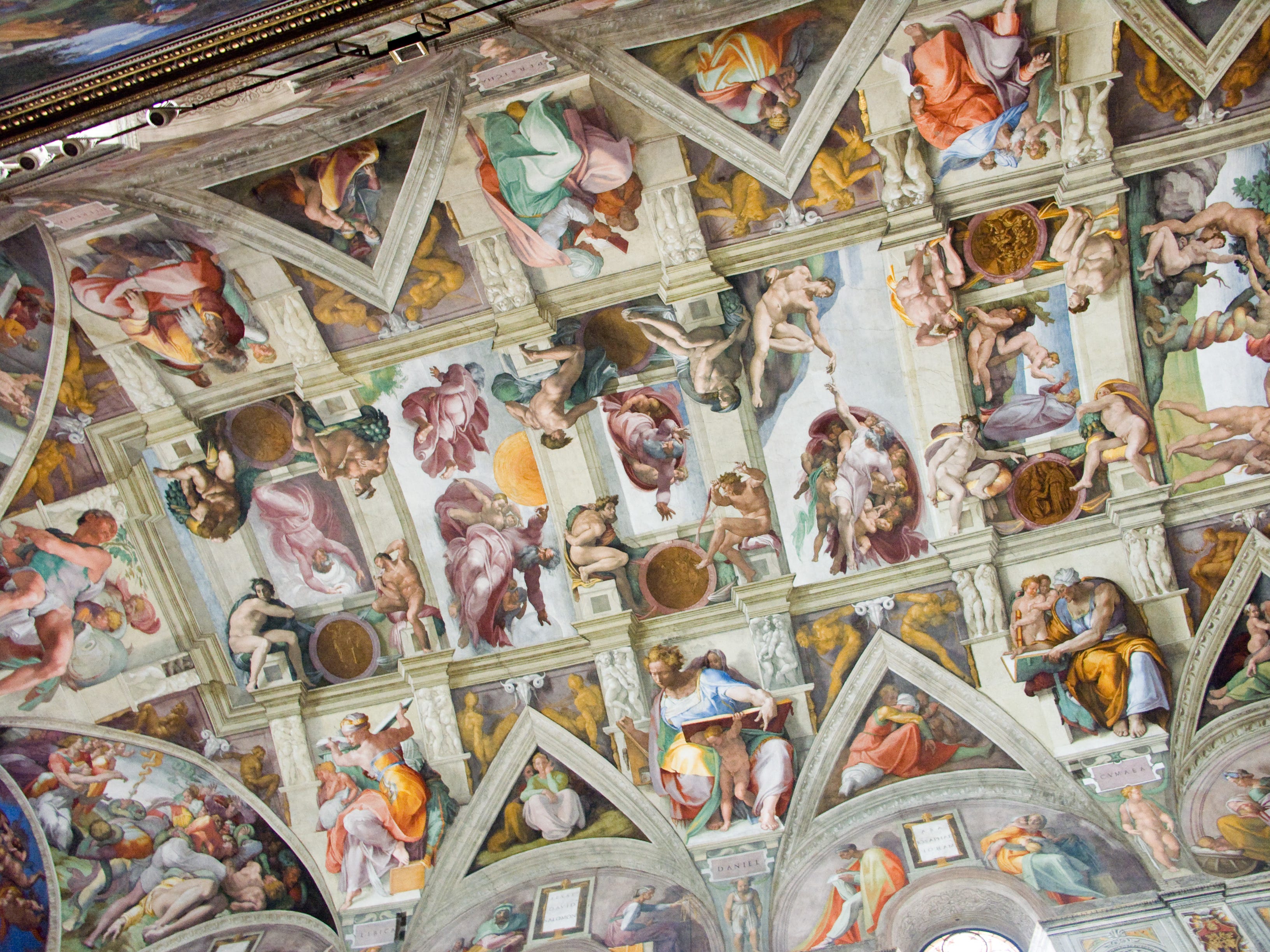
Zoom in.
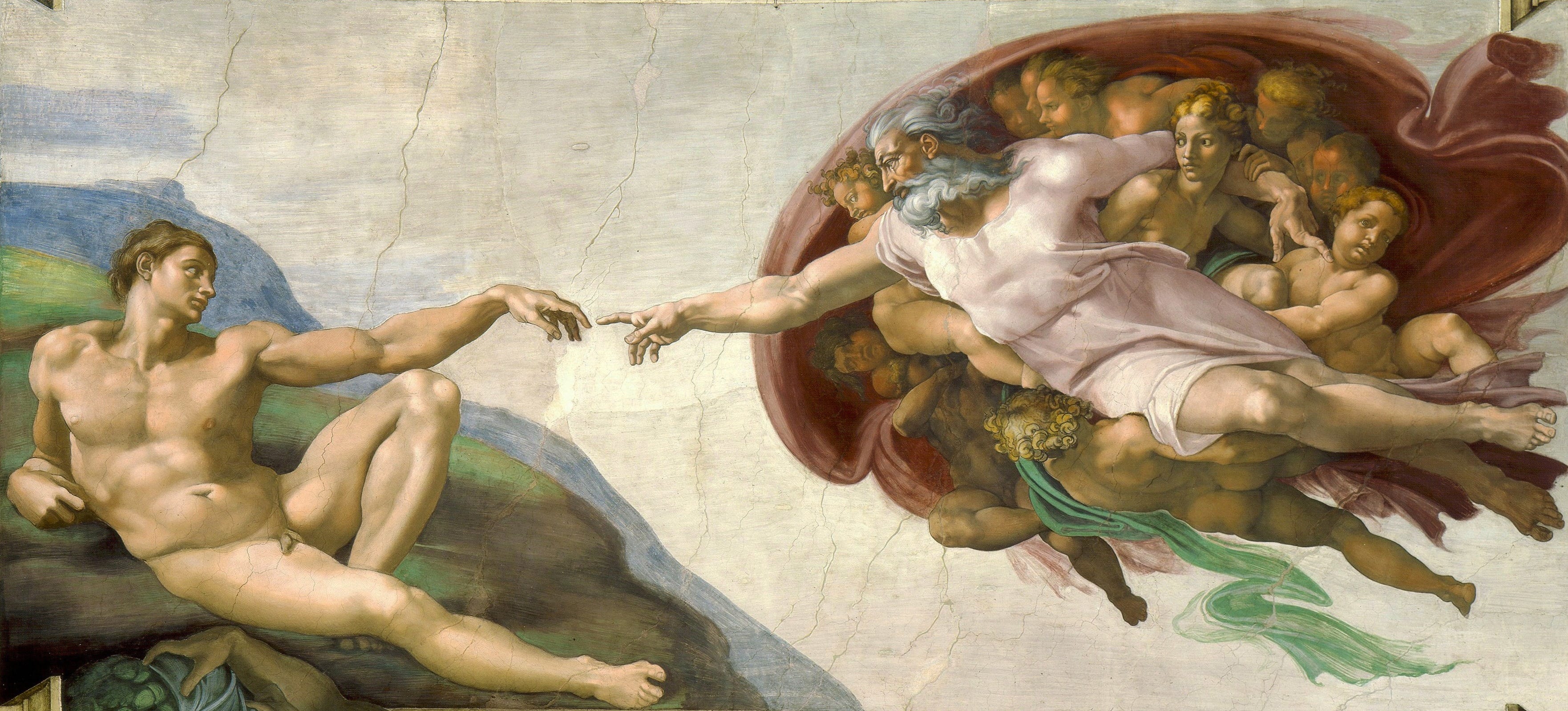
Closer. All the way to the fingertips.
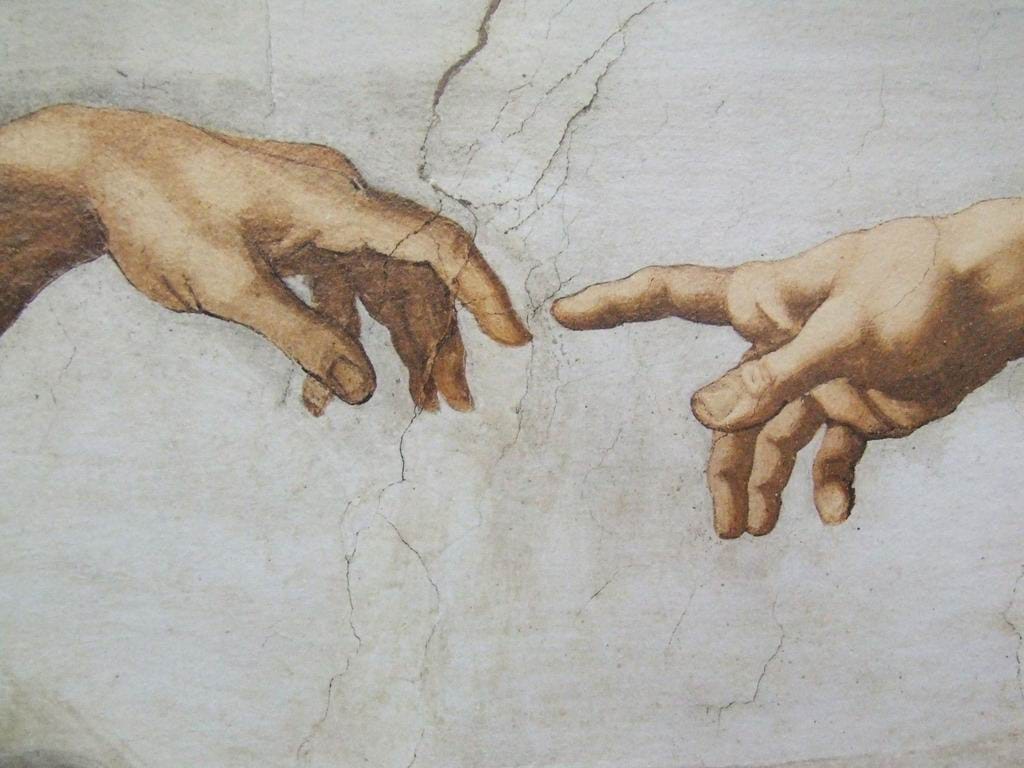
The most famous image in Western art is not about contact. It is about almost. Two index fingers, a few centimeters apart, one reaching, one relaxed. God and man, separated by a gap so small you could close it with a breath. Michelangelo did not paint the moment of creation but the moment just before. The space between.
That space is where everything interesting lives.
Closeness is the show
There is an event held every year in Europe, and now globally, where professional tram drivers compete to stop a 40-tonne vehicle on a centimeter mark. It is called the World TramDriver Championship. In September 2025, Vienna hosted the first true world edition, with 25 teams from six continents. The marquee discipline is called “Perfect Stop.” The driver must align the center of the tram’s second door with a marking on the ground. A camera captures the moment the doors open, revealing exactly how close they got. The target is mounted on wheels and moved between runs so nobody can memorize landmarks. Every millimeter of deviation costs points.
Think about that for a second. Tens of thousands of people standing in the sun and watching the livestream, holding their breath, watching a tram brake. Not because something explodes. Not because someone wins or loses in a binary sense. Because the question “how close?” turns out to be one of the most fascinating questions humans can ask.
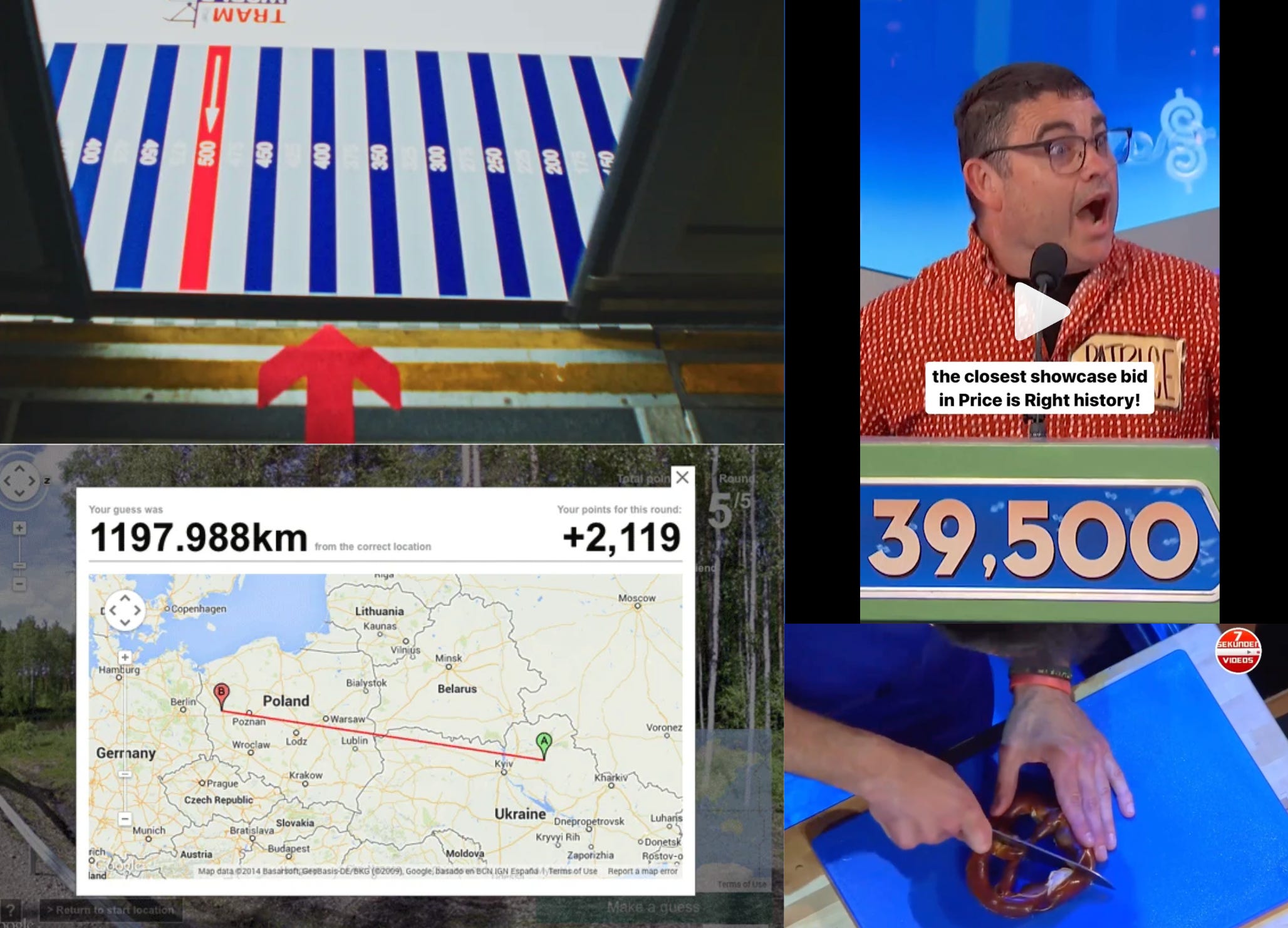
This pattern is everywhere once you start looking. In 2024, a 20-second clip from the German TV show Schlag den Henssler went viral with over 79 million views on X. The clip showed a contestant splitting a soft pretzel into two halves on a precision scale, trying to get them as close to equal weight as possible. No special effects. No storyline. Just a pretzel, a knife, a scale, and the unbearable suspense of watching numbers appear. People lost their minds. Barstool Sports called it “Pure Electricity.” Millions of people who had never heard of German Saturday night television were suddenly, inexplicably captivated by the drama of a scale readout.
On The Price is Right, the longest-running game show in American television history, the entire format is built around closeness. Contestants do not need to know the exact price. They need to get closer than the other person without going over. The Showcase Showdown is the purest version of this: two contestants, whoever is closer wins. In 2024, a contestant bid $39,500 on a package worth $39,501, off by exactly one dollar. Drew Carey called it the best Showcase bid in the history of the show. The audience did not cheer because someone won but because someone got impossibly close.
Then there is GeoGuessr, a game where you are dropped into a random Google Street View location and must guess where on earth you are. Your score is not pass/fail. It is a continuous measure of distance: the closer your pin to the actual location, the more points you earn, up to 5,000 per round. The game has 40 million player accounts, a World Championship that drew 363,000 peak viewers in Copenhagen in 2025, and an entire ecosystem of creators like Rainbolt who built audiences of millions by identifying exact locations from a single blurred frame. GeoGuessr is, at its core, a closeness engine. The question is never “are you right?” It is always “how close are you?”
The water is rising
Something has shifted. People no longer want to just know whether something will happen. They want to know how close they can get to calling it.
You can see it in how we watch sports. Expected Goals (or xG) replaced the gut-feel punditry of soccer analysis with a continuous measure of shot quality. ESPN added win probability to its permanent scorebug because viewers now expect to see how close a game is, not just who is ahead. You can see it in how we check the weather: a modern 5-day forecast is as accurate as a 1-day forecast was in 1980, and apps like Dark Sky trained a generation to read “37% chance of rain at 3pm” rather than just “rain likely.”
But here is what almost everyone in this space has missed: most prediction products, in particular prediction markets, still collapse the world into binary outcomes. Will it happen or won’t it? Yes or no. Binary is simple to build and simple to understand, which is why it came first. But binary edges are shrinking fast with profitability becoming a stronger function of latency advantages. The game gets boring. More importantly, binary outcomes throw away the most interesting information: how close you actually were.
The next frontier is continuous. Not “will BTC cross $100K?” but “where will it land?” Not “will the Fed cut rates?” but “by how much?” Not “who wins?” but “what will the margin be?” These are harder questions. They demand more from the forecaster but help separate real conviction from coin flips. And they are far more entertaining.
The appetite for this is enormous. The product landscape is almost empty. The world is full of platforms that reward you for being right. Almost nothing exists that rewards you for being close.
The word
Trepa comes from Swedish “traffa,” which means both “to hit a target” and “to meet a person.” The word is borrowed from German “treffen,” which carries the same double meaning. If you meet a friend at the mall, your paths crossed at a single point. If a snowball hits you, your path and the snowball’s path also crossed at a single point. Treffen is convergence. It is what happens when two trajectories meet precisely where they are supposed to.
We grew up watching German game shows on Saturday nights, arguing about whether a pretzel was really split perfectly, feeling the specific German satisfaction of a thing done exactly right. There is a compound word for that: Volltreffer. The full hit. Trepa is that word turned into a product.
What we believe
We believe the world has outgrown binary outcomes. “Will it happen?” is a less interesting question than “how close can you get?” We believe closeness to truth should be measured, celebrated, and rewarded. We believe forecasting is not a niche financial instrument but a skill, a game, and a culture waiting to be built. We believe the best forecasters are not the ones who are always right. They are the ones who are least wrong.
Michelangelo understood something that took the rest of us five centuries to articulate. The most powerful moment is not the moment of contact but the moment just before. The last centimeter before the tram stops. The fraction of a gram on the scale. The distance between your pin and the truth.
We live in that space. Come find us there.
Trepa team
Quick team message
We have been heads down for a while now, and we want to share what is coming.
We have been rebuilding Trepa from the ground up. V2 is an entirely new user experience designed around two things: speed and rewarding precision. If you are weary of long resolution periods, weeks of waiting just to find out if your yes/no bet was right, this is built for you. If you find binary outcomes boring, same. We do too. That is why we started this.
V2 launches in one week through an early access program. In the days leading up to it, we will be publishing our full documentation so you can read through everything before you get your hands on it.
In the meantime, our Discord remains the best place to connect with fellow precision forecasters and to reach the team directly. And if you have not already, give us a follow on X.